What's New?

Monday, August 17, 2015

Commitment of Teachers towards Effective Education by Dr. Saramma Chandy

1.Contextual Competencies: Teachers need to acquire a near total understanding  of the socio-economic, cultural, linguistic and religious contexts of the specific family milieu and the community profile. They have to understand the heterogenities and diversities of the society while working out unifying factors for building a cohesive society that believes in national integration and provides every citizen a sense of belonging to the nation with dignity and equality
2. Conceptual Competancies: The educational implication of mental, social and cultural needs are to be ascertained to the different age groups and slowly integrate them to the understanding of Universal enrolment, Universal retention and Universal quality education with specific reference to the minimal levels of learning approach translated into competency based teaching-learning process.
3. Content Competancies: Distinct structure of concepts further inter-related to rules, principles or laws. To comprehend relationships between facts and concepts, principles and theories and identify new developments in the subject to classify them into the structure of the subject in terms of improving competency.
4.Transactional Competencies: To engage the pupil in group learning, peer learning and individual learning and monitor the progress of children towards mastery through continuous evaluation, provide assistance to overcome hurdles and provide challenging  practices and achieve competencies among individuals in  a group.
5. Co-curricular Activities: Extra-curricular activities such as school assembly, school magazine, picnic, excursion etc, are essential to the development of desirable behavious, values and attitudes among students and brings out the talent edge in the various kinds of competitions viz., games, sports, group activities, drama, music, cultural and social activities.
6. Teaching Aids/ Learning Materials: As and when possible, self made learning materials that are easily available and use of natural resources and encouraging student groups to build models that help in their studies will enable better understanding and build competencies.
7. Evaluation Competencies: The knowledge of various kinds of tests that help evaluate the content and memory. Evaluation should be periodic, continuous and assess competencies based on content, context and behavioural aspects,
8. Management Competencies: To increase their abiliy to assume responsibility of self-management as an individual and as group members, Management cabpabilities of the teacher within the classroom, the institution, the resources management, personnel management, time management will all help build competencies.
9. Working with Parents: Help parents to organize supervised study lessons, remedial teaching, counselling sessions, etc, Proper coordination with parents will help solving classroom problems and better all round development of the child.
10. Working with Community and other Agencies: The school should have a wholesome rapport with the community and other Agencies. Organizing of exhibitions with student activities involving traffic control, Community Health, Cleaner environment, Civic Sense, etc. will help build competencies in the society.

Wednesday, January 14, 2015

the CALM and the STORM by Moon Moon Jetley

The Delhi Renaissance - The Urdu Poets

Under the agreeable smell of the reign of Bahadur Shah Zafar 
"the drinking vessel of Delhi"
Became filled with the wine of Pleasure

Two factors that stand out in the poetry of Zafar are frustration and gloom

O Zafar, when at last I got a chance to take a walk in the garden
There was no sign of rose left in it
O ye captives in the prison-house of chain
What did ye get by raising a hue and cry?
In the garden of this world I am like the picture of a nightingale
And whether it is spring or autumn makes no difference to me
O captives, your wings have lost the power to fly
What will you get by leaving the net, better stay where you are. 

Momin was primarily a poet of romantic disposition with a lifestyle that matched his nature. He lived the life of a playboy who soaked himself in the vices of his times

Momin, if you have any respect for faith
Jihad means battle; so go there now
Be fair, more than God you loved that life
Which you used to sacrifice for idols

The army of Islam has congregated
Heed the Imam of the times
Sacrifice your life for the sake of God
Oh God, make me worth of martyrdom too
Make me worthy of this highest of all forms of worship

Mirza Asadullah Khan Ghalib

Generations of my men have been men at arms
Poetry brings no honour to me

"When  I was young, a Perfect guide told me that peity and asceticism did not please him, and he would not forbid gay and sinful living. I could eat and drink and make merry. Only I should remember to be like the fly that sits on crystal sugar, not like the one that sits on honey. I have acted on this advice."

Ghalib believed that one would do well to learn from modern scientific inventions of the British instead of flogging a dead horse of religion and realm. Ghalib's closeness to the British and his repeated criticism of the Mughal house earned him the sobriquet of a 'supercilious sycophant. The poet lauret of the city, Ghalib had great love towards Delhi and he says, 'One should be grateful that such a city exists. where else in the world is the city so refreshing?'

'Delhi in this time, states Percival Spear was an Indian Weimar, with Ghalib for its Goethe.
 

Wednesday, May 21, 2014

Indra's Net by Rajiv Malhotra


After "Breaking India" and 'Being Different', here's the new title 'INDRA'S NET' by Rajiv Malhotra exploring the dimensions of Hindu identity post the historical references to the Aryan and Dravidian myths and the path-breaking ideologies trying to recoup the Western Interventions and offer insights into the hard core realities of an age old faith and Religion which is highly potent and emanating truths in the all encompassing 'satyam shivam sundaram' i.e, truth, harmony and beauty that has been the Indra's net. Every jewel in its node serve as a microcosm of the entire Universe being a whole in the living entity/ matter in cosmic level.

The authors see three major civilisations competing for global dominance today—the West (especially the US), China and Islam. All three have diabolical designs of splitting India, according to them, and they focus on Western efforts to break India. The problem we have is not in the study of Western intervention, though, curiously, Yankee Hindutva attempts to usurp the language of anti-imperialism.

The Hindu initiate is an active participant in his quest for adhyātma vidya (knowledge of the self). Malhotra aptly points out that none of the Hebrew prophets, Jesus, or Paul allowed for individual freedom. Instead they rejected individuality as something stained by Original Sin and even salvation in Christianity is a collective exercise. This denial of individuality in the religious realm extends to all walks of western life, and contrary to what westerners imagine they are not individualistic but highly institutionalized creatures. On the other hand, dharma frees one from conditioning, celebrates individualism, and leads one to the blissful state called satchitānanda. Unless the west rejects the foundational premises of Christianity as embodied in the Nicene Creed, it is not possible for westerners to pursue internal quest.

In Judeo-Christian traditions, revelation is initiated by God, from above, with the individual being a passive and submissive recipient. This process is highly history-centric, relies upon authority that is frozen in time, and allows for no direct experience. Dogma insists that one is born into Original Sin and human existence is sinful unless one seeks salvation from a historical prophetic tradition. But this salvation does not transform man into something sublime. God always remains an external agency and all that salvation means is that one escapes eternal condemnation to hell. These history-centric beliefs of Judeo-Christian systems also fail scientific scrutiny.

For example, Indian Classical music is non-linear and non-normative, and as a result possesses not only the musical note but also a melodic ecosystem complex called swara which has no equivalent in Western Classical music. Malhotra’s observation brings to mind Yehudi Menuhin’s rueful remark in his famous book Unfinished Journey that the tempered scale in Western Classical music where each note is adjusted up or down from its true center has corrupted western ears whereas the perfect fifth set by the tanpura in Indian Classical music is a criterion for all other intervals and has rendered the Indian ears sensitive to microtonal variations called ghamaka that westerners cannot comprehend. In an echo of Malhotra’s remark about Indian individualism vis-à-vis the lack of individualism in the west, Menuhin too remarks that whereas the Indian musician’s expressions celebrate his individual quest to unite with the infinite the western musician accepts loss of freedom for the sake of collectivism.

Friday, September 20, 2013

Turn Around India (Through Inclusive Governance and Team Spirit) by R P Gupta

The book was released in January 2013 by Sri. Narendra Modi, Chief Minister, Government of Gujarat INDIA.

Need for tax reforms: Total individual tax payers in India is hardly 3.5 crore out of 120 crore population. It means tax compliance is barely 3% as compared to 45-50% in the USA.With such massive non-compliance, it is better to amend the law instead of converting everybody as law violators. It is therefore, recommended to replace 'personal income tax' through expenditure tax and then merge it with GST (Goods and Services tax) which will be revenue neutral. It will not violate legislature intention to tax rich persons and to re-distribute among others.

There is general reluctance from unorganized sector for keeping themselves within the net of indirect taxes like VAT and service tax. This is mainly due to tax hazards, compliance cost and fear arising out of compliance formalities. Introduction of GST will be a good solution, provided it is simplified for SMEs. Merger of multiple taxes will become an incentive for compliance. Some special provision may be incorporated for small enterprises such as self assessment and exemption for maintaining books of account.

High rate of Stamp Duty is a deterrent in land and real estate business for disclosing full value of the transaction which should be slashed down to 2% on uniform basis in the country. Some tax incentive may be extended on long term capital gain arising out of sale of land and real estate. This should convert majority of real estate transactions into its full value. Therefore, deployment of black income on real estate shall also reduce.

If the Government hence, takes a bold step to merge personal income tax into GST, the result could be astonishing on the front of savings and investments without any loss of revenue. In addition, government borrowing cost is likely to reduce by about Rupees one lakh crore. Non tax revenue and capital receipts should be increased with similar innovations.

Saturday, July 21, 2012

Quality Management by Bindiya Goyal

ISO 9000 Standards:
The focus of ISO 9000 standards is on the generation of confidence in product conformance and on process management with customer as the main driving force.

ISO 9000 series consist of five individual standards of which three are quality management systems and the other two are guidelines for selection and employment of quality system.

ISO 9000 - Quality management and Quality assurance standards - Guidelines for selection and use
It focuses on rigorous auditing during the certification process. For eg., quality system, process control, management responsibility, quality rewards and statistical techniques.

ISO 9001 - Quality System - model for Quality assurance in design, development, production, installation and service
It includes all documenting operations like design, production, service inspection, testing, installation, training etc.

ISO 9002 - Quality system - Model for Quality assurance in Production and Installation & Servicing
It is used for detecting and correcting problems in contract negotiations between the supplier and purchases. This is often employed by the manufacturers.

ISO 9003 - Quality Systems - Model for Quality Assurance in Final Inspection & Test

ISO 9004 - Quality Management and Quality System Elements - Guidelines
It provides planning and implementing guidelines for managing producers goods and services

Quality Management Principles

1. Focus on customers
2. Leadership
3. Involvement of Employees
4. Process Approach
5. Interrelated Approach to Management
6. Continuous Improvement
7. Objectivity in Data Analysis for Effective Decsions
8. Mutually Beneficial Relationship

Benefits

1. Strengthens the relationships between suppliers and customers
2. Reduces dependence on individuals
3. Institutionalize training throughout the organisation
4. Reduces customer auditing
5. Fewer external audits
6. Optimum utilization of resources
7. Compliance to trade regulations at National and International Level
8. Company certified by quality systems will strengthen customer confidence by assuring excellence

Saturday, June 30, 2012

Open Access movement in the Age of Innovation and ICT

Copyrght: is the exclusive right to publish and distribute a work. Copyright is a bundle of rights, automatically assigned to the author(s) by legislation in most countries. Copyright is the exclusive right of the author to derive economic benefits from his own writing or artistic performance or creative work.
      The infringement of the copyright in a work occurs if one or more of the following acts take place without the aurhtorisation of the copyright owner
1. Reproduction of the work in the material form
2. Publication of the work
3. Communication of the work to the public
4. Performance of the work in Public
5. Translation of the work.

Digital copyright protection technologies

Digital water mark technology is the form of stenography in which copyright and other source information is hidden inside a document, image or sound file without the user's knowledge, but copies will retain the information.

Cryptography involves encryption of information to render it unreadable or not understandable language, which only the legitimate user can decrypt.

Electronic Marking is generated by the computerthat is tagged to each of the digital object. The computer also registers the recipient of an illegally copied digital object.

Digital Signature, also known as electronic signature is an electronic data attached to associated digital object and serves as a system of authentication. This concept is to make the data illegible for everyone else except those specified.

Plagiarism

"to steal and pass off (the ideas or words of another) as one's own; to use without crediting the source; to commit literary theft; in other words, an act of fraud.

Types of Plagiarism as listed by plagiarism.org

  • The Ghost Writer
  • The Photocopy
  • The Potluck Paper
  • The Poor Disguise
  • The labour of laziness
  • The self-stealer
Other types of plagiarism not listed by plagiarism.org
  • The Unintentional
  • The Unconscious
  • The Photographic Memory
  • The Archives Digger
  • The Inspired
Also, there are other forms under situations cited to be plagiarism
  • The forgotten footnote
  • The Misinformer
  • The Too-perfect Paraphrase
  • The Resourceful Citer
  • The Perfect Crime
Editors: Dr. Ancy Jose; Dr. Prathiba A. Gokhale; Santosh C. Hulagabali published by HIMALAYA PUBLISHING HOUSE PVT. LTD.


Saturday, November 26, 2011

J R D Tata by M A Shewan

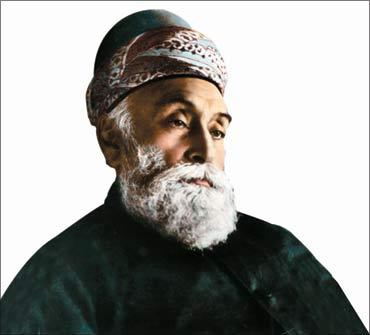
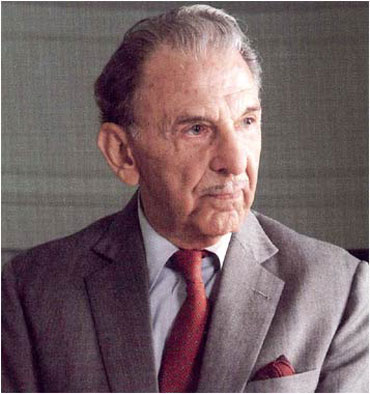
14tata3.jpgJehangir Ratanji Dadabhoy Tata was a legend in his life time. Under him Tata group diversified into a large number of sectors from airlines to hotels, trucks to locomotives, heavy chemicals to pharmaceuticals, financial services, tea, information technology, etc. He was also the longest serving member of the Atomic Energy Commission.

Quiet spoken, with piercing green-blue eyes, and acquiline nose and an aristocratic air, JRD remained a much revered figure within the Tata organization and some what of an Institution abroad. A casual dresser, he refrained from the ostentatious lifestyles of many Indian industrialists, preferring to live in a rented bungalow surrounded by skyscrapers in downtown Bombay.

JRD scoffed at the idea of being characterised as the Rockefeller of India. "I have never had an interest in the accumulation of wealth". He says, 'I have always been more interested in what wealth can do for the betterment of society.'

"I suppose the big difference between the Tatas of India and the other great founders of trusts and foundations is that, while the Fords and the Rockefellers have remained very wealthy, the Tatas have retained very little individual wealth".

He reckoned that this personal wealth was probably just over $.200,000, noting: "I am not even close to being a dollar millionnaire because whatever I inherited I put in a charity trust many, many years ago".

JRD entered the Tatas as an unpaid apprentice in December 1925. His mentor was John Peterson, a Scotsman who had joined the Group after serving in the Indian Civil Service. At 22, soon after his father passed away, he was on board of Tata Sons, the Group's flagship company.

At the age fo 34, in 1938, JRD was elected Chairman of Tata sons making him the youngest head of the largest industrial group in India. His leadership at Tata Sons, at the beginning had 14 enterprises which half a century later had expanded to a conglomerate of 95 enterprises.

Breaking from the common practice of having members of one's family run different operations in a business, JRD urged to bring in professionals to the table. He turned the Tata group into a business federation, where enterpreneurial talent and expertise were encourage to flower.

He for the first time, pioneered the system of developing 'employee welfare schemes' in corporate India and steered the principles of an eight hour working day, free medical aid, workers' provident fund and accident compensation schemes, which were later, adopted as statutory requirements in India.

Self effacing, modest, wistful and endearing are a few of the (adjectives) laurels used to describe JRD.

In 1992, because of his selfless humanitarian endeavours, JRD Tata was awarded India's highest civilian honour, the BHARAT RATNA. In the same year, JRD Tata was also bestowed with the United Nations Population Award for his crusading endeavours towards initiating and successfully implementing the family planning movement in India, much before it became an official governmental policy.

JRD never forgot these words uttered by his father, the Founder:
"We do not claim to be more unselfish, more generous or more philanthropic than other people. but we think we started on sound and straightforward business principles, considering the interests of the shareholders our own, the health and welfare of the employees the sure foundation of our success."
-Jamshetji
20ratan7.jpg